
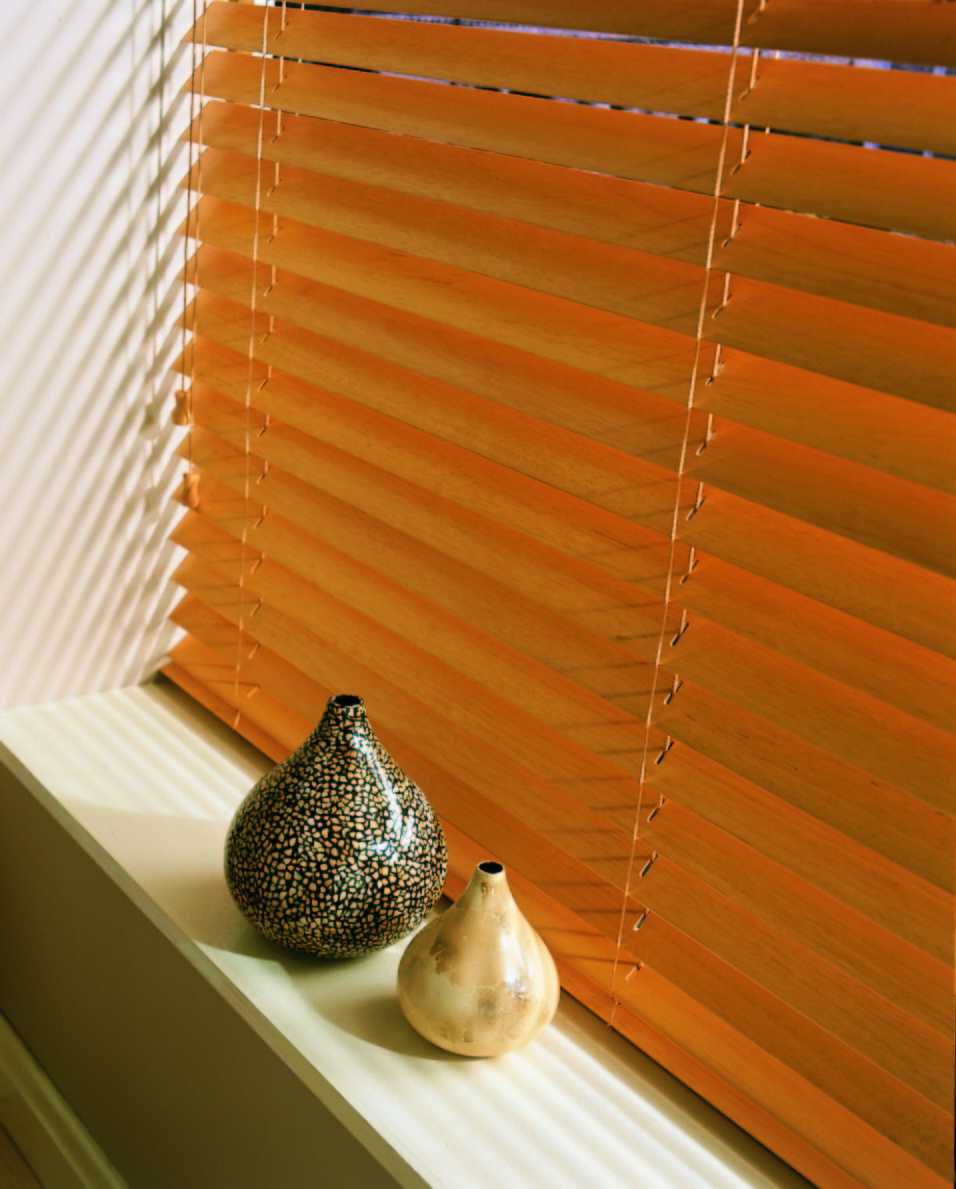
Faux wood venetian blinds give you the warm, structured look of timber slats without the fuss of a material that dislikes steam and splashes. The slats tilt and raise exactly like a real wood venetian, the finish reads as natural grain from across the room, and the surface wipes clean in seconds. For Warrington homeowners dressing a kitchen, a bathroom or a bay-fronted living room, that combination of looks and low maintenance is difficult to beat. This guide covers what faux wood is, how it compares with real timber, which slat widths and finishes are available, and how made-to-measure measuring and fitting works locally.
What faux wood venetian blinds actually are
Faux wood is a manufactured material finished to imitate timber. The slats are shaped, coloured and textured to give the appearance of real wood grain, then assembled into a venetian blind with the usual ladder strings, tilt mechanism and headrail. UK suppliers describe the range as wood effect venetian blinds, and many offer them alongside genuine wooden venetians so customers can compare both side by side.
Unlike a shop-bought blind that is trimmed down to size, faux wood venetians are usually made to measure. Each blind is built to the exact width and drop of the window it is going on, which matters on bay windows, awkward reveals and older openings where a stock size rarely sits neatly. Ranges typically include classic colours and soft natural woodgrain finishes, and some come with matching fabric tapes for a more traditional, tailored look at the window.
Real wood or faux wood? How the two compare
The honest answer is that both look good, but they behave differently once moisture is involved. Real wood venetians bring genuine grain and a natural finish that suits period properties and grown-up living rooms. Faux wood venetians deliver the same classic look with a surface designed to cope with humid conditions, which is why suppliers recommend faux wood options for bathrooms, kitchens and other damp areas.
Consideration | Real wood venetian | Faux wood venetian |
|---|---|---|
Appearance | Genuine timber with natural variation between slats | Wood effect finish in classic colours and soft woodgrain |
Humid rooms | Better suited to dry rooms where it can be kept stable | Moisture and mould resistant, recommended for humid areas |
Cleaning | Needs gentle, careful dusting | Easy to clean and quick to wipe over |
Typical cost | Usually the premium option | Generally the more affordable route to the same look |
Finishes | Light oak, deep walnut, plain white and grey among others | Light oak, deep walnut, plain white and grey among others |
If a window sits above a sink, next to a shower or in a room that steams up regularly, faux wood is the sensible choice. If the window is in a dry, low-traffic room and you want the real thing, natural wood remains an option and can be supplied in the same venetian style.
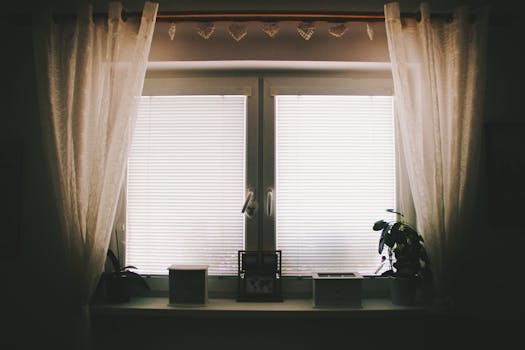
Slat widths and finishes to choose from
Faux wood and wooden venetian ranges commonly come in 35mm and 50mm slat widths. The narrower 35mm slat gives a finer, more detailed look and can suit smaller windows and more compact rooms, while the wider 50mm slat makes a bolder statement and shows more of the view through the window when the blind is tilted open. Both widths work in living rooms, bedrooms, kitchens and offices.
Colour is where most people spend the longest. Light oak and other pale woodgrain finishes keep a room feeling bright and airy, deep walnut brings warmth and weight to a darker scheme, and plain white or grey suit modern and contemporary interiors where a clean, simple line is the priority. Matching fabric tapes are available on some faux wood ranges if you prefer the softer, more upholstered look that tape adds to the vertical edges of a blind. Free samples posted out by UK suppliers are the easiest way to test a finish against your paintwork, flooring and light, and it is always worth checking how a sample looks in the room at different times of day before committing.
Where faux wood venetian blinds work best
Venetian blinds earn their keep in rooms where you want control over light and privacy without losing the view. Faux wood suits a wide spread of spaces:
Kitchens and utility rooms, where steam, splashes and cooking residue make an easy-clean surface genuinely useful.
Bathrooms and shower rooms, where moisture and mould resistance matters more than a delicate natural finish.
Living rooms and dining rooms that need a classic, timeless look with a bit of texture at the window.
Home offices and commercial premises, where a smart, uniform finish across several windows looks professional.
Bay windows and larger openings, because made-to-measure sizing means the slats run neatly to the frame.
Tilting the slats lets you bounce light off the ceiling while keeping the room private from the street, and raising the blind fully gives you the whole window back. That flexibility is the reason venetians have stayed popular in British homes for so long, and faux wood simply removes the maintenance worry that puts some people off timber.
Measuring, fitting and what happens on the day
Made-to-measure is only as good as the measurement behind it, which is why a home measuring visit comes first. Accurate measuring takes the guesswork out of recess and face fixing, checks for obstructions such as handles and tiles, and confirms the headrail will clear the frame. A local fitter then installs the blind, checks the tilt and raise are running smoothly, and tidies up afterwards.
DIY installation of venetian blinds is possible and there are plenty of videos showing how it is done, but quotes for professional fitting can vary a lot, and a blind that is a few millimetres out can rattle, catch or sit proud of the recess. If you would rather not spend an afternoon up a stepladder with a drill, having it fitted properly the first time is usually the better trade.
Why a local Warrington supplier is worth considering
Poppy Blinds is a family-run Warrington business that supplies, measures and fits made-to-measure blinds for homes and commercial premises across Warrington and the wider North West, including Widnes, Runcorn, Frodsham, Lymm, Stockton Heath, Newton-le-Willows, St Helens and the surrounding towns. Blinds are measured, made and installed with aftercare and guarantees ranging from 12 to 36 months depending on the product.
The difference between a local fitter and a national chain is mostly in the visit itself. There are no pushy salespeople, quotes are free and carry no obligation, and the person who measures your window is the sort of person who puts shoe covers on before walking through your hallway. If something needs adjusting later, you are ringing a local number rather than working through a call centre. Free no-obligation quotes are available through the enquiry form on the website.
Looking after faux wood blinds
Beyond a regular dust with a microfibre cloth or a quick pass with a vacuum brush attachment, faux wood needs very little. A damp cloth handles most marks, and because the material is moisture and mould resistant, you can clean it without the caution you would apply to real timber. Give the slats a light wipe in kitchens where airborne grease settles, dust the headrail occasionally, and check the cords and ladder strings for any fraying.
Keeping the blind in a tilted position rather than fully closed for long periods helps air move around the slats. If a cord or tilt mechanism ever feels stiff, mention it early rather than pulling harder, and make use of any warranty or aftercare arrangement that came with the fitting.
Getting a faux wood venetian quote in Warrington
Start by deciding which windows you want to dress and roughly which finish appeals, then ask for a home visit so the measurements are taken properly. Free samples are the cheapest way to shortlist a colour, and it helps to see the slats next to your existing paintwork, worktops and flooring rather than on a screen. From there, a made-to-measure quote should tell you clearly what is included in the fitting.
If you are comparing a faux wood blind against a wooden one, ask about both in the same visit. Your fitter can explain how each behaves in the exact room you have in mind, including how much steam and sunlight the window sees, and you can settle on a finish with confidence rather than guesswork.
Frequently Asked Questions
Are faux wood venetian blinds suitable for kitchens and bathrooms?
Yes. Faux wood is specifically recommended for humid areas because it is moisture and mould resistant, so steam from a shower, a bath or a boiling pan will not spoil it the way it can affect natural timber. The surface also wipes clean easily, which makes short work of cooking splashes and condensation marks on slats near a sink or hob.
Do faux wood blinds look like real wood?
They are designed to. Faux wood slats are finished as wood effect, with woodgrain textures and classic colours such as light oak and deep walnut sitting alongside plain white and grey. Close up, most people can tell the difference from genuine timber grain, but from normal seating distance the look is convincingly warm and natural in both traditional and contemporary rooms.
What slat widths do faux wood venetian blinds come in?
Faux wood and wooden venetian ranges commonly come in 35mm and 50mm. The narrower 35mm slat gives a finer, more detailed appearance that suits smaller windows, while the wider 50mm slat makes a stronger feature of the window and opens up more of the view. Both widths are available in a range of finishes.
How do I clean faux wood venetian blinds?
Dust the slats with a microfibre cloth or a vacuum brush attachment, then wipe them with a slightly damp cloth for anything stubborn. Because the material is moisture resistant, a damp wipe will not harm it. In kitchens, clean a little more often so airborne grease does not build up, and check the cords and ladder strings while you are there.
Should I fit faux wood venetian blinds myself or pay for installation?
DIY fitting is possible and widely documented, but it is fiddly, and professional installation quotes can be steep. A made-to-measure blind that is even slightly out can rattle or catch when tilted. Having a local fitter measure and install removes that risk, and any fitting or aftercare guarantee usually depends on professional installation.

Recent Comments